The GLP-1 More Men Should Know About: Why Tirzepatide Beat Semaglutide Head-to-Head
For men who already know how to train, know how to eat — and still keep ending up back too heavy — one uncomfortable question remains: when does refusing help stop being discipline?
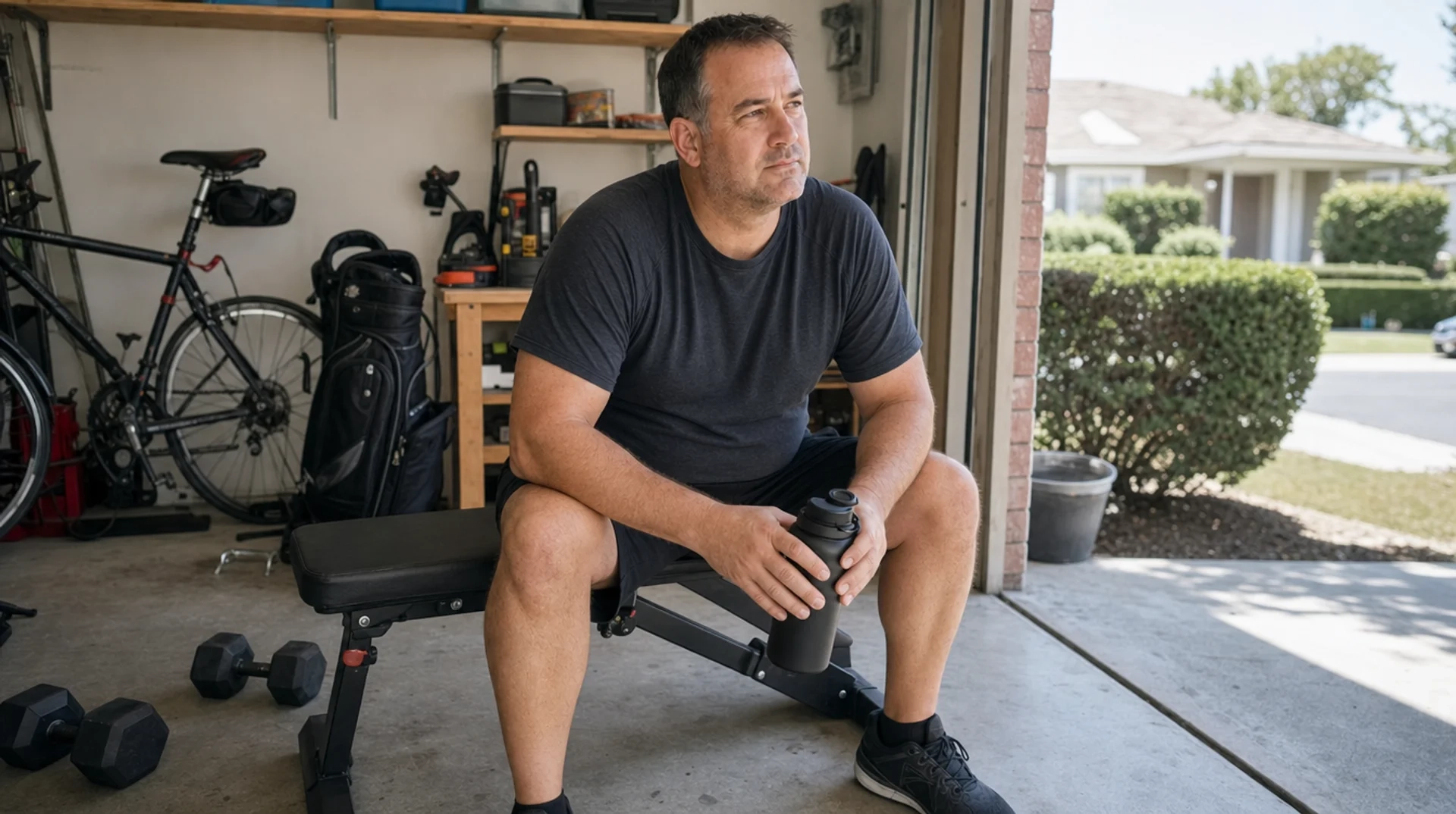



He knows how to train. He knows how to eat. The question is why it keeps slipping.Photo: Spotlight Daily / Illustration
You know how to lose weight. That’s probably not the problem.
You know chicken has more protein than pizza. You know four beers on Saturday don’t help. You know walking 10,000 steps beats sitting at a desk all day. You know exactly what happens when you cut out late-night food, tighten your calories and start training four times a week — because you’ve done it.
Maybe you did everything. No booze during the week. Meal prep on Sundays. And maybe you lost 12 pounds. Your belt moved a notch. You caught yourself in the mirror and thought: “There he is. I’m back.”
And then life happened again. Your kid’s schedule changed. Your knee started bothering you. Football season came back. Takeout became easier than meal prep.
And six months later, you’re staring at the scale wondering how the hell you ended up here again.
The Lie a Lot of Men Keep Telling Themselves
It usually sounds something like: “I could lose it if I really wanted to.”
The harder question is: can you lose it and stay there — without spending half your life fighting yourself and getting depressed in the process?
Because there’s a strange pride that comes with doing things the hard way. Handle your own problems. Fix your own truck. There’s real value in personal responsibility.
But personal responsibility and refusing useful tools are not the same thing.
If your truck has a mechanical problem, you don’t prove how tough you are by refusing the right wrench. If your blood pressure is high, you don’t earn extra credit for refusing treatment. If your eyesight gets worse, refusing glasses doesn’t make you disciplined.
Yet when the problem is weight? Suddenly using medical help can feel like admitting defeat.
Maybe You’re Not Trying to Become “Skinny”
Maybe you couldn’t care less about getting a six-pack again.
What you miss is feeling capable. Walking up a hill without pretending you’re not winded. Playing basketball with your son without needing five minutes afterward. Hiking without being the guy everyone waits for. Getting through 18 holes without your back killing you. Getting dressed without automatically grabbing whichever shirt hides your stomach best.
And sometimes the wake-up call isn’t the mirror at all. It’s your dad developing diabetes. A friend your age having a heart scare. Or a thought that arrives out of nowhere: “I’m 47. Why do I feel 67?”
“Just Try Harder” Becomes an Incomplete Answer
Your body isn’t a spreadsheet. Yes, calories matter. Yes, food choices matter. Yes, exercise matters.
But when you lose weight, your biology doesn’t simply sit there applauding. Weight loss can trigger compensatory responses: appetite can increase, energy expenditure can decrease. So you can be doing everything right — and simultaneously be making next month harder than the previous one.
That may explain something you’ve probably experienced firsthand. First you’re dieting. Then you’re thinking about food constantly. Then you start negotiating: I trained today, I can have it. I’ll tighten it up tomorrow. Tomorrow becomes Monday. Monday becomes next month.
There’s even a name for part of it: food noise. You’re not physically starving. You’re just thinking about food. You finish dinner and ten minutes later your brain starts looking for something salty or sweet. It’s not that you don’t understand nutrition — you understand it perfectly. You just keep having to win the same argument with yourself.
People using modern GLP-1 medications often describe the biggest change not as suddenly becoming more disciplined — but as those arguments becoming quieter, or gone completely.
GLP-1 Medications Attack a Variable Most Diets Don’t
These medications affect pathways involved in appetite, satiety and food intake. And the two biggest options are not the same.
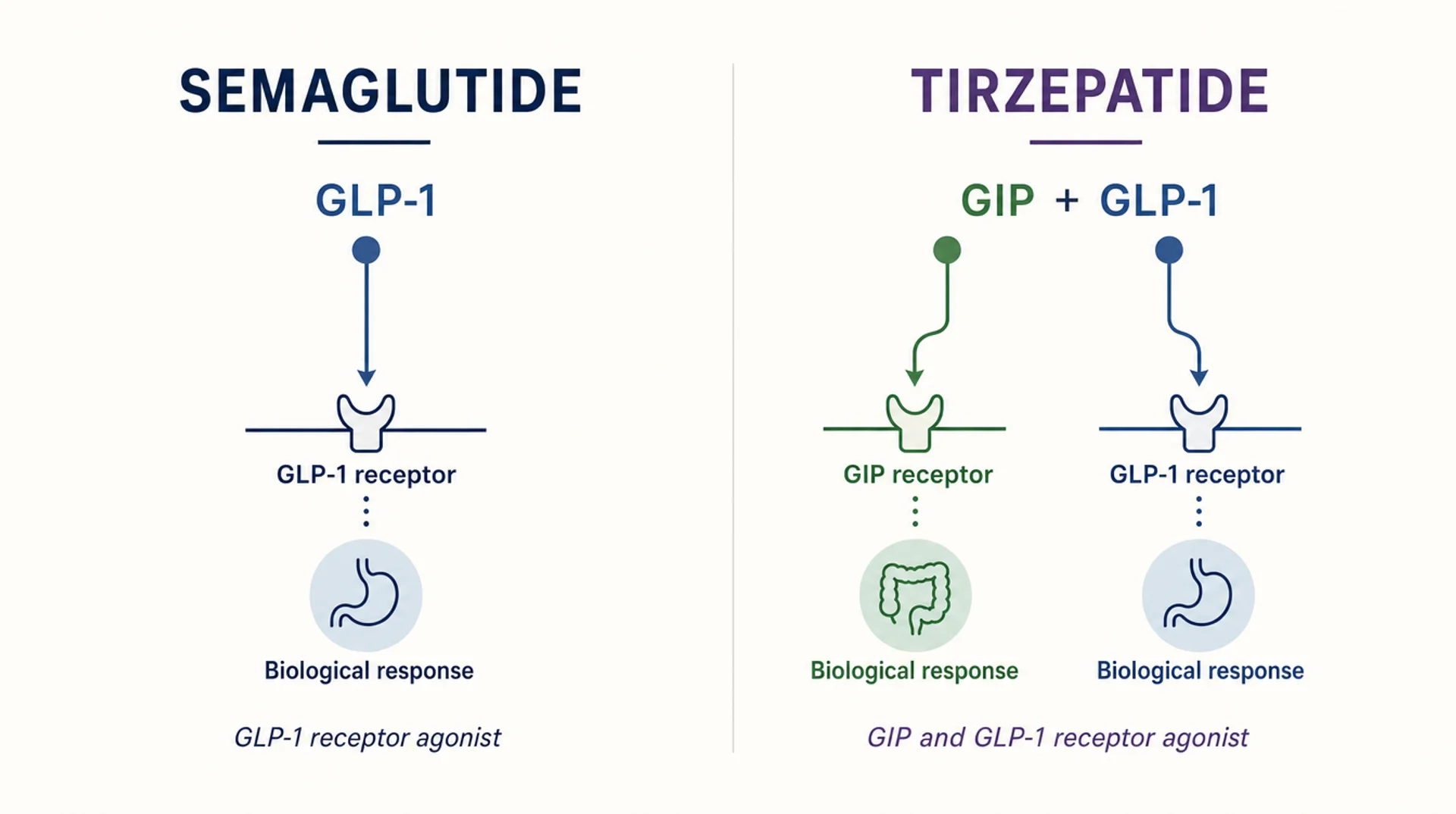
Semaglutide targets the GLP-1 receptor. Tirzepatide targets two incretin pathways — GIP and GLP-1.
If you’re going to use a tool, it’s worth knowing how the tools compare.
Tirzepatide Beat Semaglutide Head-to-Head
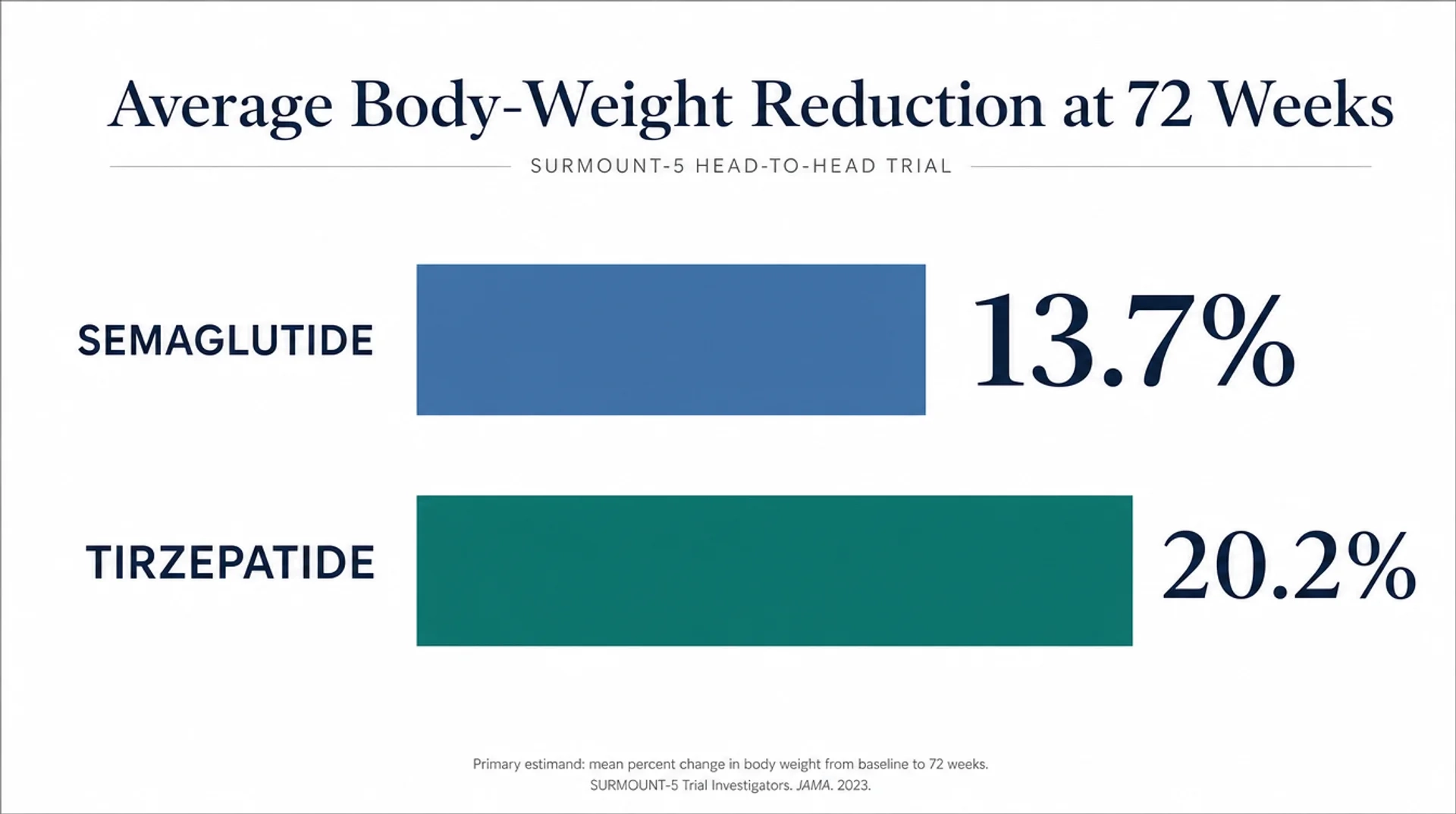
SURMOUNT-5 directly compared FDA-approved tirzepatide with FDA-approved semaglutide for 72 weeks in adults with obesity or overweight without diabetes. No extrapolating between separate studies — a direct, randomized comparison.
At the studied maximum tolerated doses:
- Tirzepatide: 20.2% average body-weight reduction — versus 13.7% for semaglutide
- 48.4% of participants on tirzepatide lost at least 20% of body weight — versus 27.3% on semaglutide
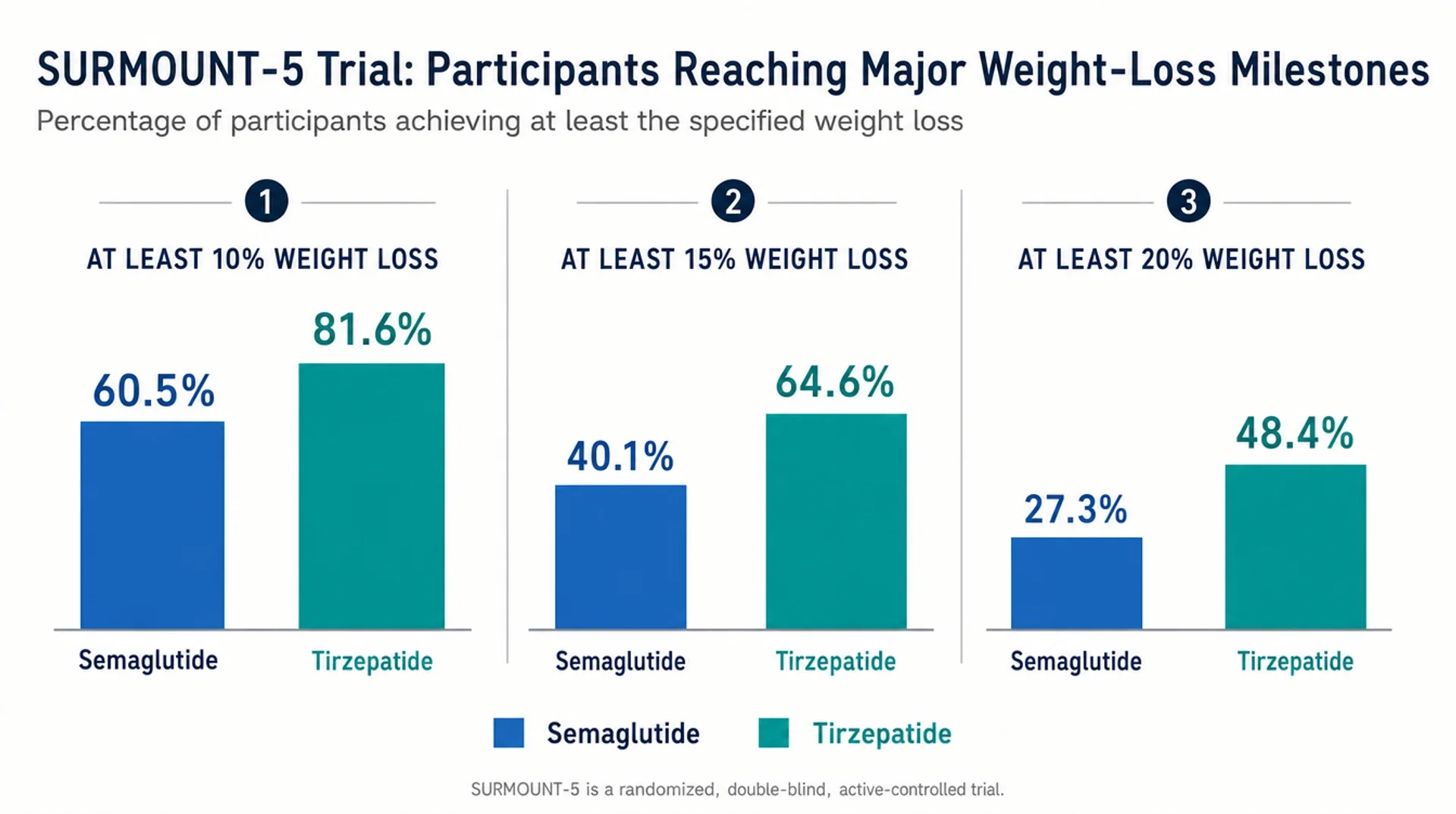
SURMOUNT-5, a randomized, double-blind, active-controlled trial. For a guy trying to lose five pounds, the difference may not be the deciding factor. If you’re trying to lose 40, 50 or 70, the averages get a lot more interesting.
“Better Results Means Worse Side Effects, Right?”
Except it was the exact opposite.
In the direct comparison, greater average weight loss came with fewer of the common symptoms people worry about — not more. Semaglutide remains an effective and established option. But strip the question down to: “Which option produced greater average weight loss in the direct head-to-head trial with fewer symptoms?” — and the answer was tirzepatide.
If you’re finally going to use medical help, and maximizing average efficacy is your priority, that deserves serious attention.
“Am I Really Going to Inject Medication I Bought Online?”
If that thought makes you skeptical — good. You should be skeptical.
There’s a huge difference between a licensed medical program and some guy selling vials on the internet. That’s where Arbor stands out.
Arbor was built to make online GLP-1 treatment feel like healthcare — not internet shopping. It connects patients with licensed healthcare providers who determine whether prescription treatment is medically appropriate. According to Arbor, the program includes:
- Board-certified U.S. physicians
- Licensed U.S. pharmacy partners
- 24/7 access to licensed clinicians
- Registered-dietitian aftercare
Arbor is also LegitScript certified — and reports treating more than 10,000 patients.
So before price even enters the conversation: Arbor solves the trust problem first.
Then Comes the Number That Changes the Equation
This is the part most guys expect to suck. You’ve probably seen what GLP-1 medication can cost. Branded cash-pay options run several hundred dollars a month; some list prices sit above $1,000 before insurance or savings programs. And some telehealth providers charge membership fees on top of medication.
Arbor’s current starting prices:
- Semaglutide: from $99/month
- Tirzepatide: from $149/month
According to Arbor, starting-tier pricing includes medication if prescribed, clinician care, refills and shipping.

Now remember what we established about the head-to-head data — and the actual question becomes: “Is another $50 per month worth considering for the option with stronger average head-to-head efficacy?”
That’s a much more interesting decision than “Can I afford some $1,000-a-month drug?” Especially next to what you may already have spent: the gym phases, the supplements, the clothes in sizes you hoped you’d never buy. Maybe thousands over the years.
Semaglutide or Tirzepatide?
If keeping the starting price as low as possible is your priority: semaglutide from $99 is hard to ignore.
If maximizing average head-to-head weight-loss efficacy matters more: tirzepatide from $149 is the rational place to start.
Either way, the decision happens with a clinician — not with a shopping cart.
You’ve Already Proved You Can Do Hard Things
Maybe the next move isn’t another 12-week challenge. Another six weeks of perfect chicken and rice. Another promise that this time you’ll grind hard enough to make it stick.
Maybe the smarter move is finding out whether a medical tool makes sense for you — and proving your discipline and accepting help stop being mutually exclusive.
The first step takes about ninety seconds: a private eligibility check that tells you whether a clinician is likely to consider treatment appropriate for you.
Personal responsibility and refusing useful tools are not the same thing. Nobody proves how tough he is by using the wrong wrench.
A men's health physician, to Spotlight Daily
Comments (6)
Sorted by topThe truck analogy got me. I spent Saturday under my Silverado with the right tools for every bolt, then told myself using medicine for this would be weakness. Make it make sense.
I'm the guy in the article. Lose 12, gain 18, repeat for a decade. The part about negotiating with yourself after workouts is painfully accurate.
Still think most men should just fix their diet and sleep first. But I'll admit the head-to-head numbers are hard to argue with.
What I didn't expect: the side effect part. Everyone in my gym assumes the stronger drug must hit harder. The trial says the opposite.
Two guys in my fantasy league are on one of these programs. Neither told anyone for a year. This article is why.
Did the eligibility check during halftime. Took less time than the commercial break. Weirdest part was realizing I'd been avoiding a 90-second form for two years.