Why Taking a GLP-1 Isn't Cheating — And Why You Don't Have to Keep Losing Weight the Hard Way
The hardest part about considering medication may not be the injection. It may be admitting you're finally ready to stop doing this the hardest possible way.


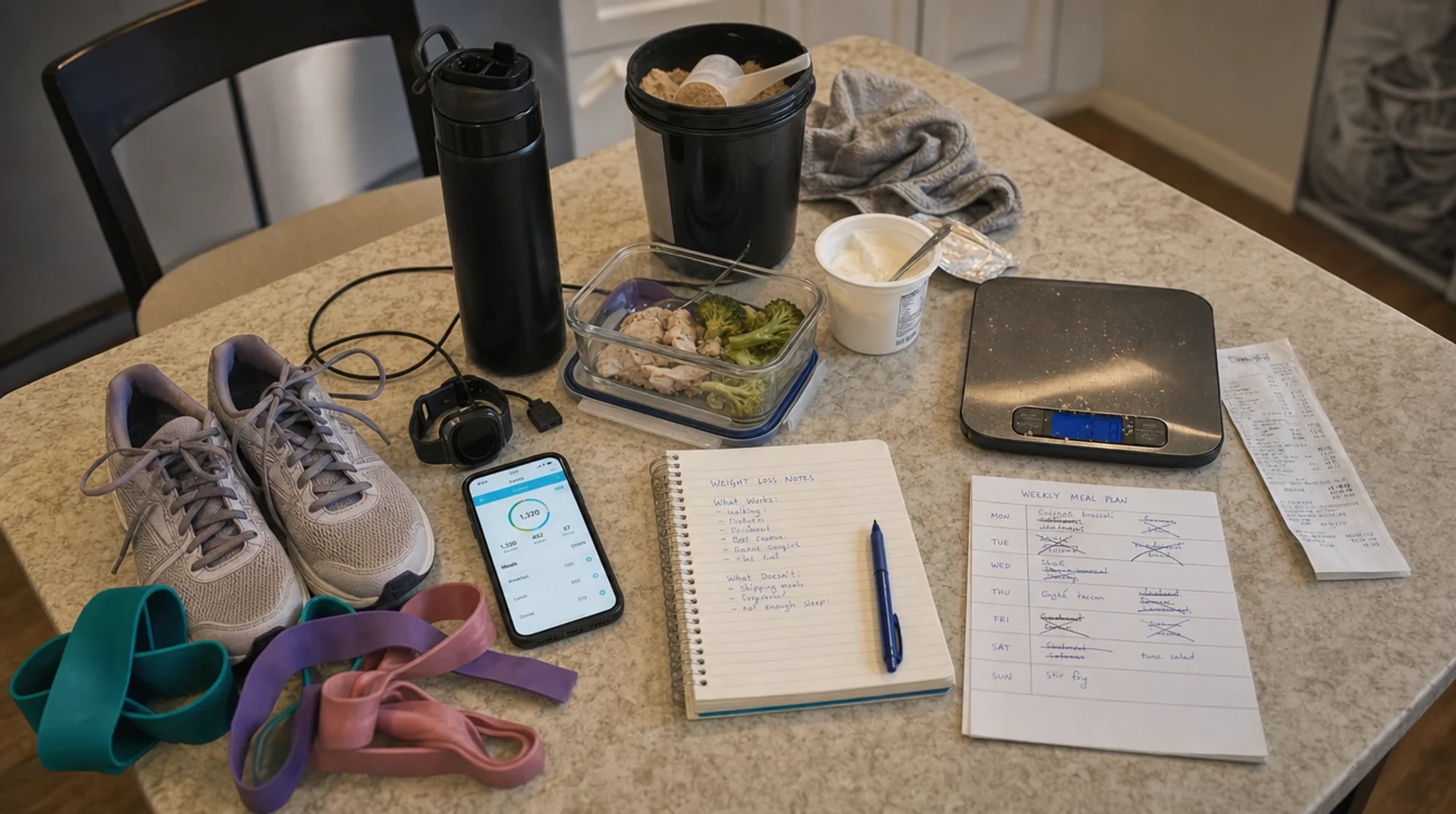
The question has shifted from 'should I?' to 'why did I wait this long to ask?'Photo: Spotlight Daily / Illustration
If you’ve spent years trying to lose weight “the right way,” the hardest part about considering medication may not be the injection.
It may be admitting that you’re finally ready to stop doing this the hardest possible way.
You already know what you’re “supposed” to do. And maybe that’s exactly why the idea of using a GLP-1 feels so uncomfortable — because somewhere in the back of your mind is a thought you’d probably never say out loud:
“Shouldn’t I be able to do this myself?”
Maybe you’ve watched someone you know lose 30, 40 or 60 pounds after starting one of the new weight-loss medications. You were happy for her. And then another thought crept in: Yeah… but she had help.
And if you’ve considered using one yourself, the judgment gets even harsher. I should just have more discipline. I know what I’m supposed to eat. I’ve lost weight before. Maybe medication is taking the easy way out.
Which raises a surprisingly uncomfortable question: if a GLP-1 makes weight loss easier — why is that automatically a bad thing?
Because This Probably Isn’t Your First Attempt
Maybe there was WeightWatchers. Then intermittent fasting. Then the month you stopped drinking. Then the year you started obsessing over protein.
Maybe you bought the food scale. Maybe you can estimate the calories in restaurant meals almost automatically. Maybe you’ve already successfully lost 15 pounds. Maybe more than once.
And then watched the scale slowly move the other way.
Here’s what makes that cycle so brutal: you rarely conclude that the strategy failed. You conclude that you failed.
Except there’s a problem with that explanation — and the data proves you already know it. In Pew Research Center data, 71% of U.S. women said willpower alone is usually not enough for people to lose weight and keep it off.
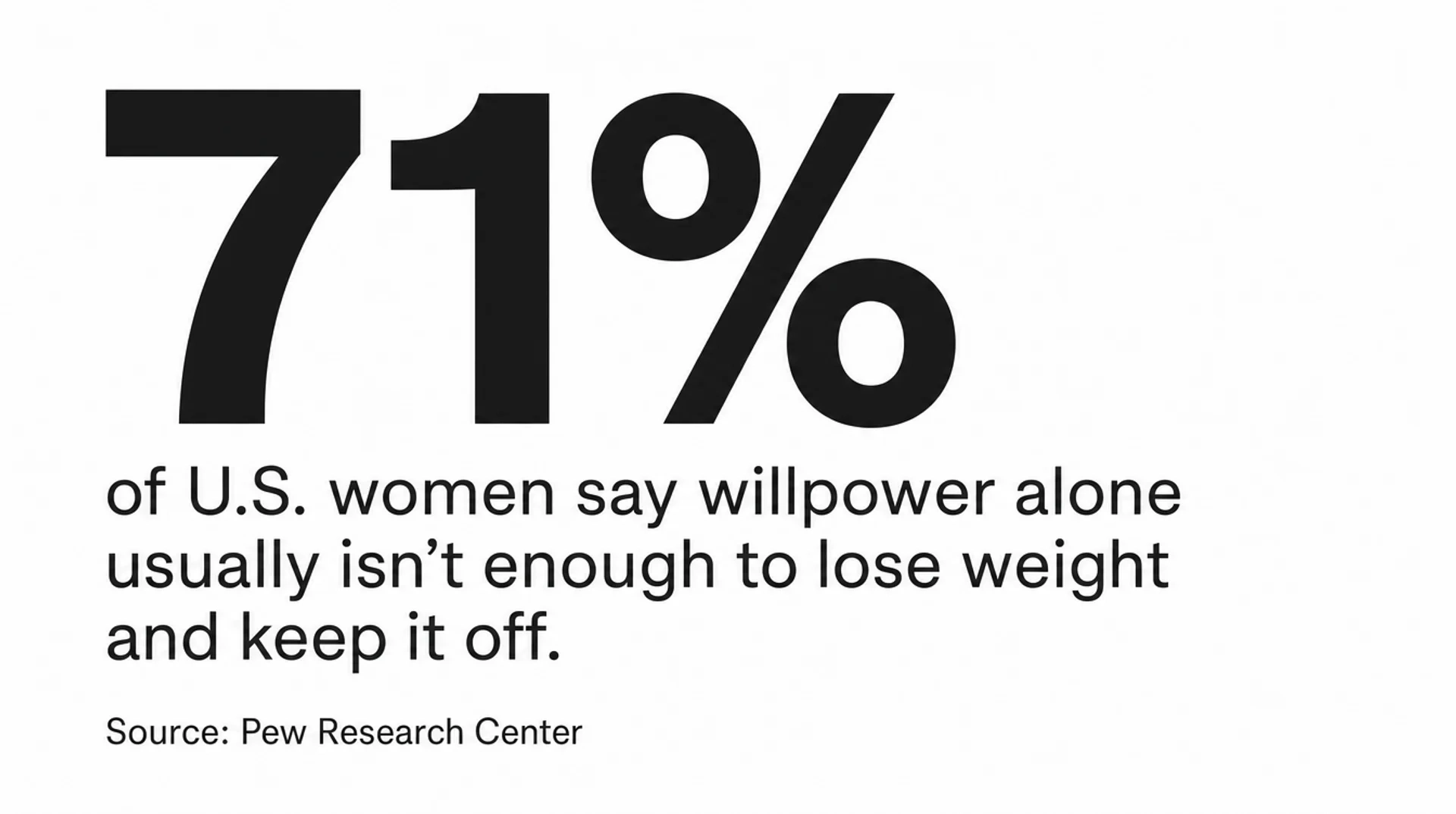
So apparently, we understand this when we’re talking about everybody else. Why are we so much harsher when we’re talking about ourselves?
Somehow, We Turned Weight Loss Into a Morality Test
If somebody has high blood pressure and medication helps control it, nobody says: “That doesn’t count. Do it through willpower.”
If someone takes migraine medication, nobody admires the person who suffered through the headache longest.
But with weight, suddenly suffering becomes part of the requirement. Hungry all day but resisted it? Good. Fought cravings every evening? That’s the job. Lost weight with medical help? Now somebody wants to debate whether you “earned” it.
Health isn’t a competition. There isn’t a referee. Your body doesn’t award bonus points because reaching your goal was miserable.
Maybe using medical help doesn’t mean you failed. Maybe it means you stopped insisting on doing something the hardest possible way.
This Is What GLP-1 Medications Actually Change
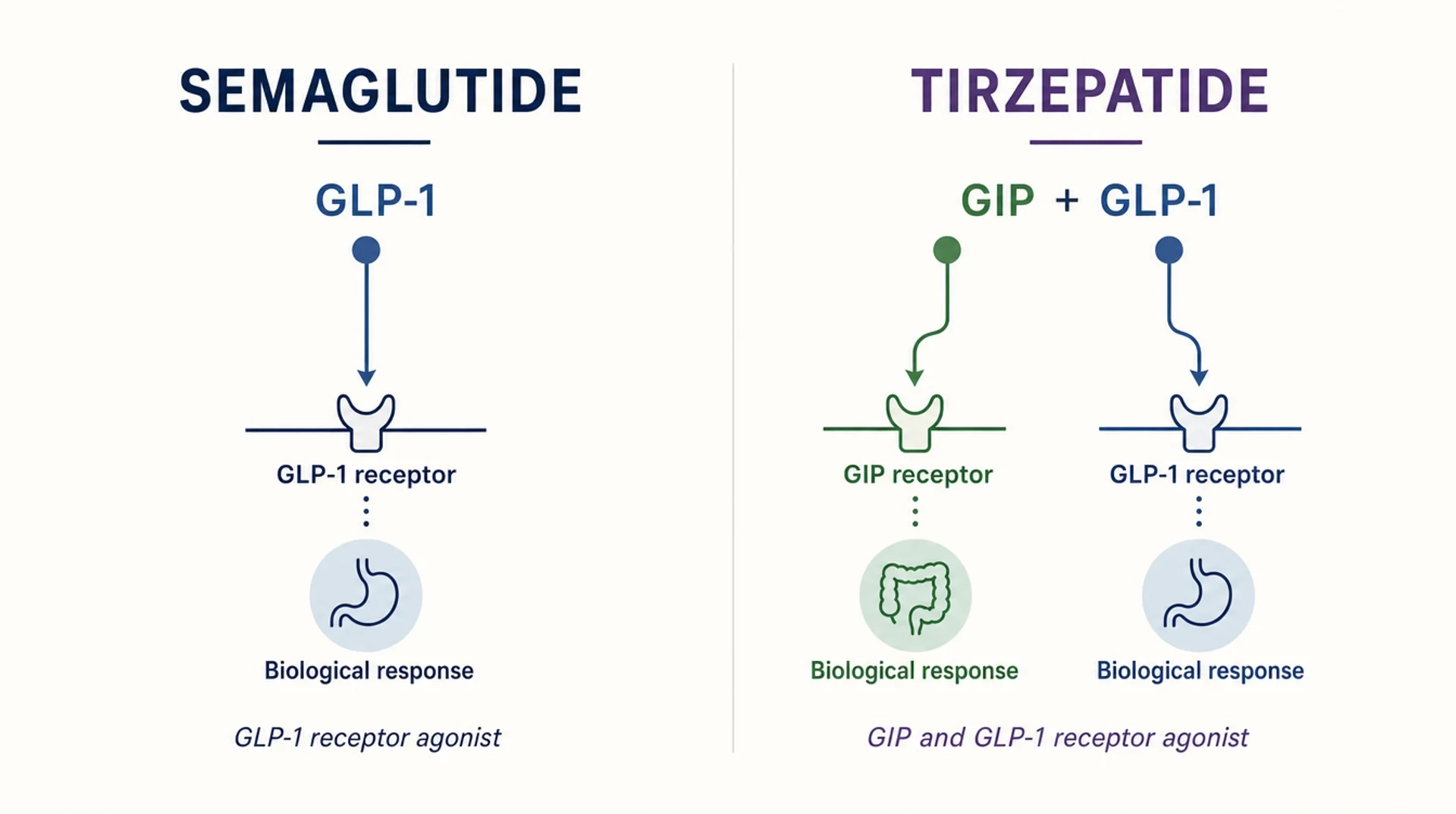
These medications interact with biological pathways involved in appetite, satiety and food intake. And there is now more than one major way to do that.
You’ve probably heard one name more than any other: semaglutide acts on the GLP-1 receptor. But another medication has attracted enormous attention — tirzepatide acts on GIP and GLP-1 receptors. Two incretin pathways instead of one.
What Happened When Researchers Compared Them Head-to-Head?
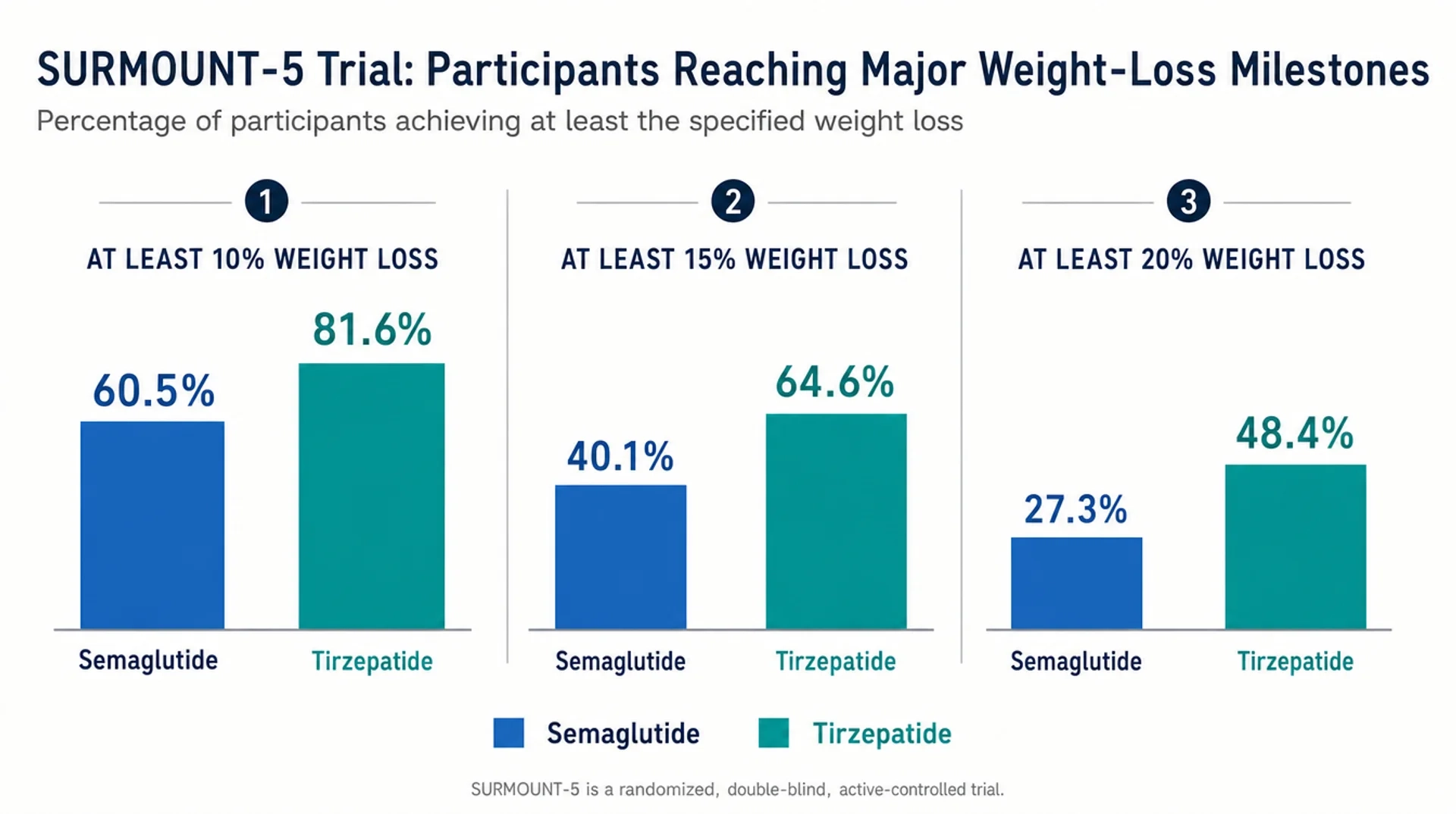
For years, people could only compare separate semaglutide studies with separate tirzepatide studies. Then came SURMOUNT-5: a direct 72-week comparison of tirzepatide and semaglutide in adults with obesity or overweight without diabetes.
The results were very clear:
- Tirzepatide: 20.2% average body-weight reduction — versus 13.7% for semaglutide
- 1 in 2 participants on tirzepatide reached at least 20% weight loss — versus a little over 1 in 4 on semaglutide
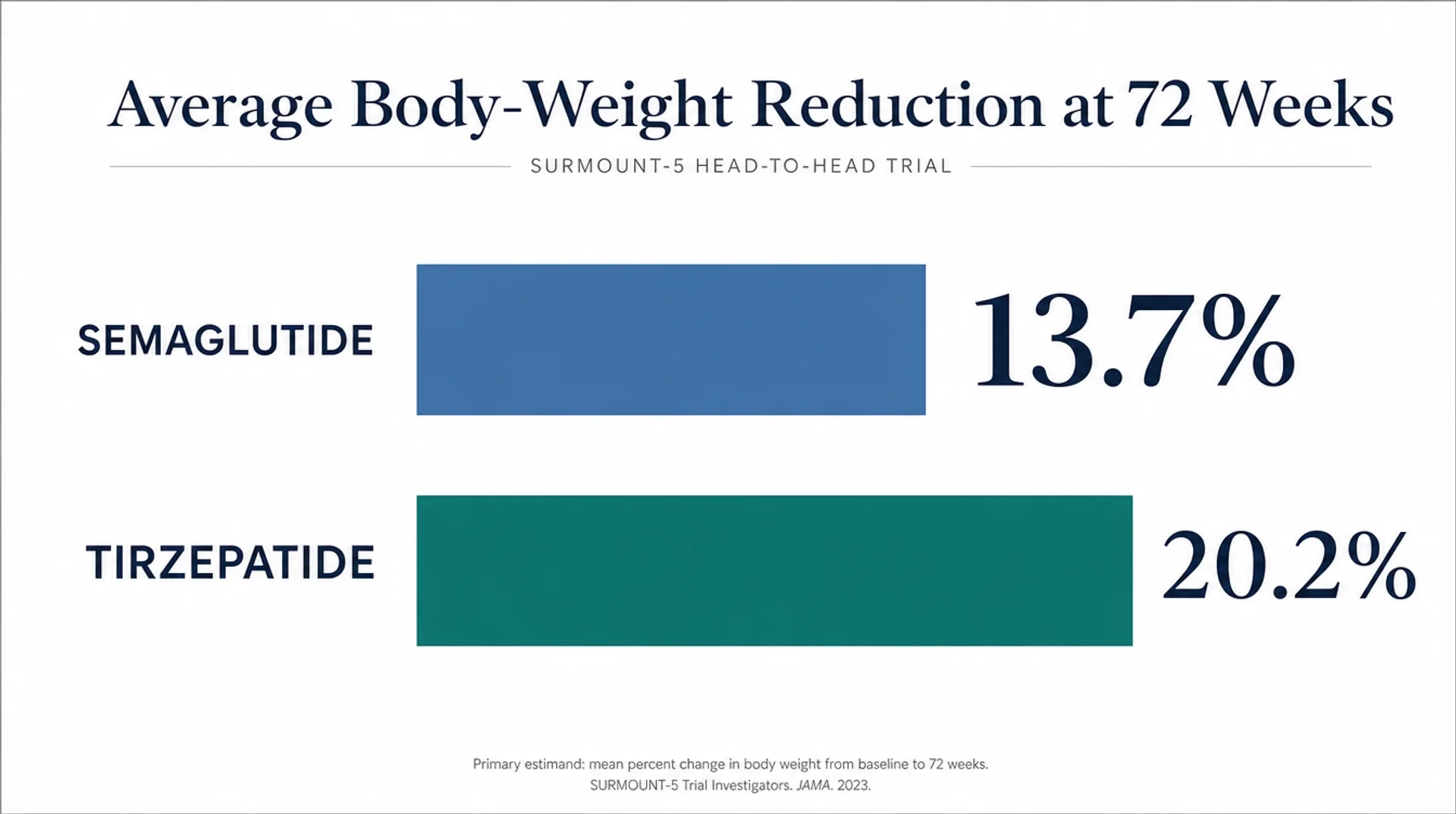
“Of course it works better,” you might think. “It probably has much worse side effects.” A reasonable assumption — but the direct trial didn’t show the dramatic difference in common symptoms many people expect. The contrary happened: greater efficacy with fewer symptoms.
So is tirzepatide simply “better”? Not universally. But if the question is “Which produced greater average weight loss in the direct head-to-head trial with fewer symptoms?” — the answer was tirzepatide. And if you’ve finally decided to consider medical help, it makes sense to know that before automatically choosing the cheaper option.
“Okay. But Where Would I Actually Trust Getting Something Like This?”
That may be the bigger question. Being open to GLP-1 treatment is one thing. Trusting somebody with an injectable prescription medication is another.
That’s where Arbor stands out.
Arbor was designed to make online GLP-1 care feel like healthcare — not internet shopping. It’s a U.S. telehealth platform connecting patients with licensed healthcare providers who determine whether prescription treatment is medically appropriate.
According to Arbor, its program includes:
- Board-certified U.S. physicians
- Licensed U.S. pharmacy partners
- 24/7 clinician access
- Registered-dietitian aftercare
And Arbor has treated more than 10,000 patients. So before price even enters the conversation, Arbor checks the boxes that should matter when you’re considering injectable medication online.
Then You See the Price
This may be the most surprising part of the entire story — because after hearing “GLP-1,” you may already assume the next number is several hundred dollars, or even more than $1,000 per month.
Arbor’s current starting prices:
- Semaglutide: from $99/month
- Tirzepatide: from $149/month
According to Arbor, starting-tier pricing includes medication if prescribed, clinician care, refills and shipping.

And now the head-to-head study becomes commercially interesting. Because at Arbor, the starting-price difference between the two is $50 a month — so if a clinician considers both reasonable options for you, the question is no longer simply “Which one is cheaper?”
It’s: “Is another $50 per month worth considering for the medication with the stronger average head-to-head weight-loss efficacy?”
If price is your overriding concern, semaglutide from $99 is compelling. But if maximizing average efficacy is the priority, tirzepatide from $149 starts looking like a very rational upgrade — much closer to your budget than you probably assumed.
Easier Isn’t Cheating
So: is taking a GLP-1 cheating?
Who exactly are you cheating? There is no prize waiting for the person who took the most difficult route. What matters is how you feel walking up a flight of stairs. Whether you avoid being in photos. How much mental energy food consumes. What your clinician thinks about your health.
Shame shouldn’t be the thing making that decision.
Easier isn’t cheating. Easier may simply be smarter.
The first step takes about ninety seconds: a private eligibility check that tells you whether a clinician is likely to consider treatment appropriate for you.
Health isn't a competition. There isn't a referee. Your body doesn't award bonus points because reaching your goal was miserable.
A weight-management physician, to Spotlight Daily
Comments (5)
Sorted by topThe sentence about watching someone lose 40 pounds and thinking 'yeah, but she had help' — I've never felt so called out by an article. That was me. Word for word.
I lost 15 pounds four separate times. FOUR. Nobody talks about how the fifth attempt feels in your chest.
Credit where due: this is the first article on the topic that actually cites the head-to-head trial instead of just vibes. 48% vs 27% hitting 20% loss is a real difference.
I still believe lifestyle change should come first, and I don't love how quickly these articles jump to medication. At least this one says to talk to a clinician.
My doctor suggested a GLP-1 eight months ago and I said no out of pure pride. Read this, booked the follow-up. The glasses analogy is what did it.