The 'Easy Way Out'? Why More Women Are Done Apologizing for Using GLP-1s
If you've spent years trying to lose weight 'the right way,' the hardest part about considering medication may have nothing to do with needles.
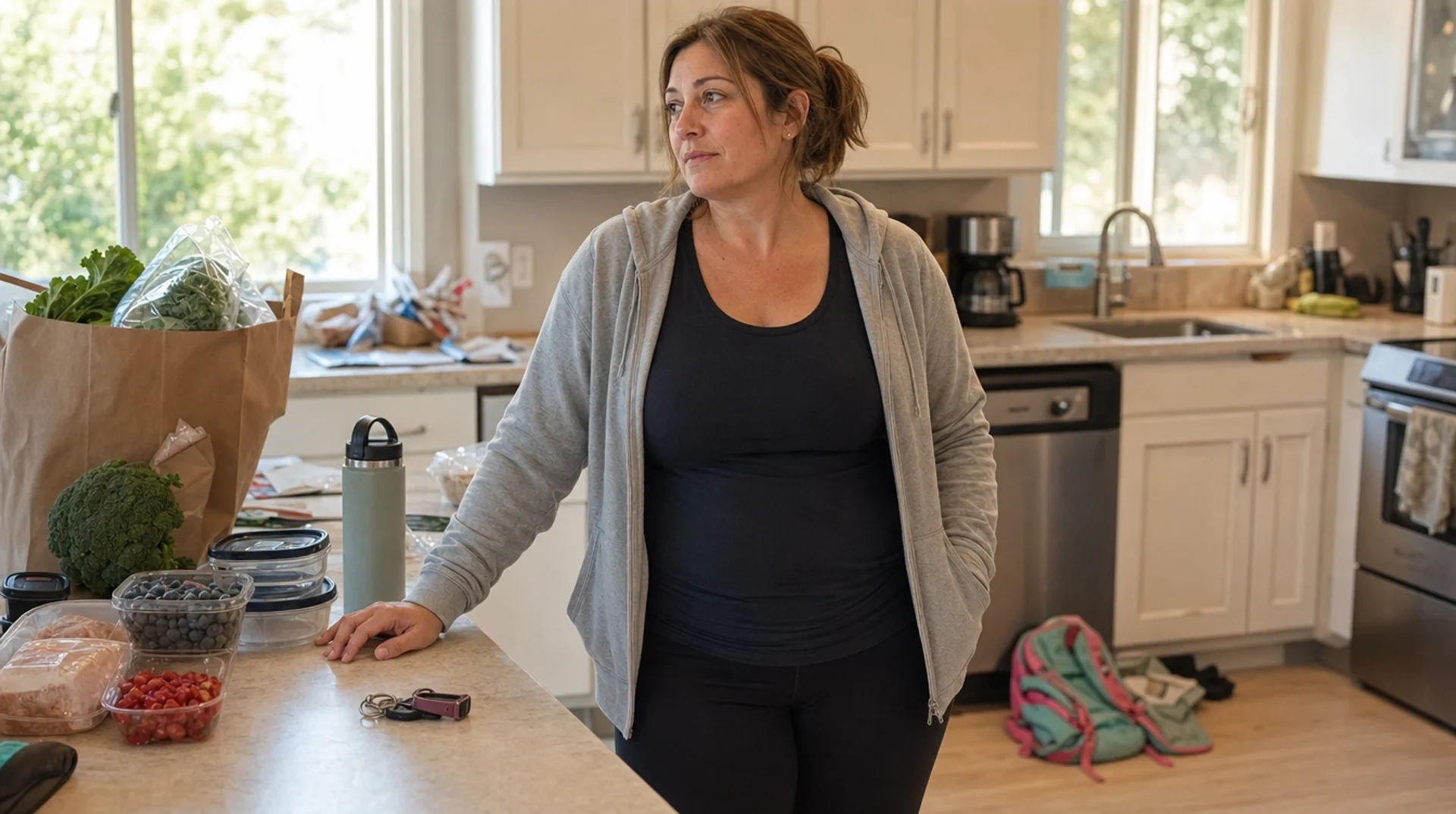

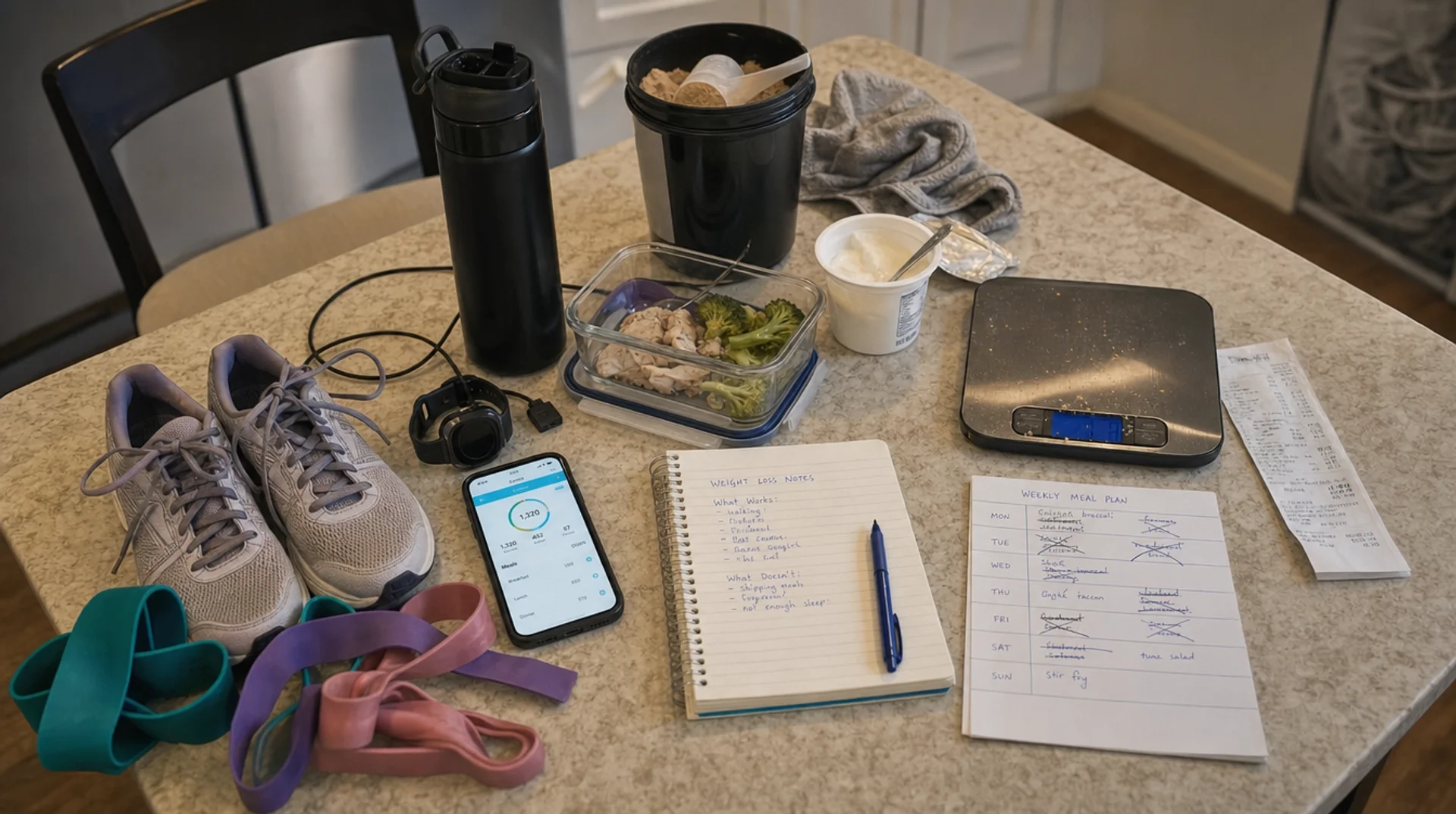
More women are questioning why weight loss is the one health goal that is supposed to hurt.Photo: Spotlight Daily / Illustration
If you’ve spent years trying to lose weight “the right way,” the hardest part about considering medication may have nothing to do with needles.
It may be admitting to yourself that you want help.
You probably already know what you’re supposed to do. And maybe that’s exactly why considering a GLP-1 feels so complicated — because somewhere in the back of your mind is a thought you’d probably never say out loud:
“Shouldn’t I be able to do this myself?”
Maybe you’ve watched another woman lose 30, 40 or 60 pounds after starting a GLP-1. Maybe you were genuinely happy for her. And then the uncomfortable question arrives: if I used medication too… would that mean I cheated?
It sounds strange when you put it that plainly. But for a lot of women, it’s very real.
Because This Probably Isn’t Your First Attempt
Maybe there was WeightWatchers. Then intermittent fasting. Then the month when you stopped drinking. Then the year you started obsessing over protein.
Maybe you bought the kitchen scale. Maybe you know exactly how many calories are in a tablespoon of olive oil. Maybe you’ve already successfully lost 15 pounds — and then watched the scale slowly move the other way while you were doing everything you were supposed to do.
And every single time, the story ends the same way: “This time I just need to stay consistent.”
Here’s what makes that cycle so brutal: you rarely conclude that the strategy failed. You conclude that you failed. You weren’t disciplined enough. You should have wanted it more.
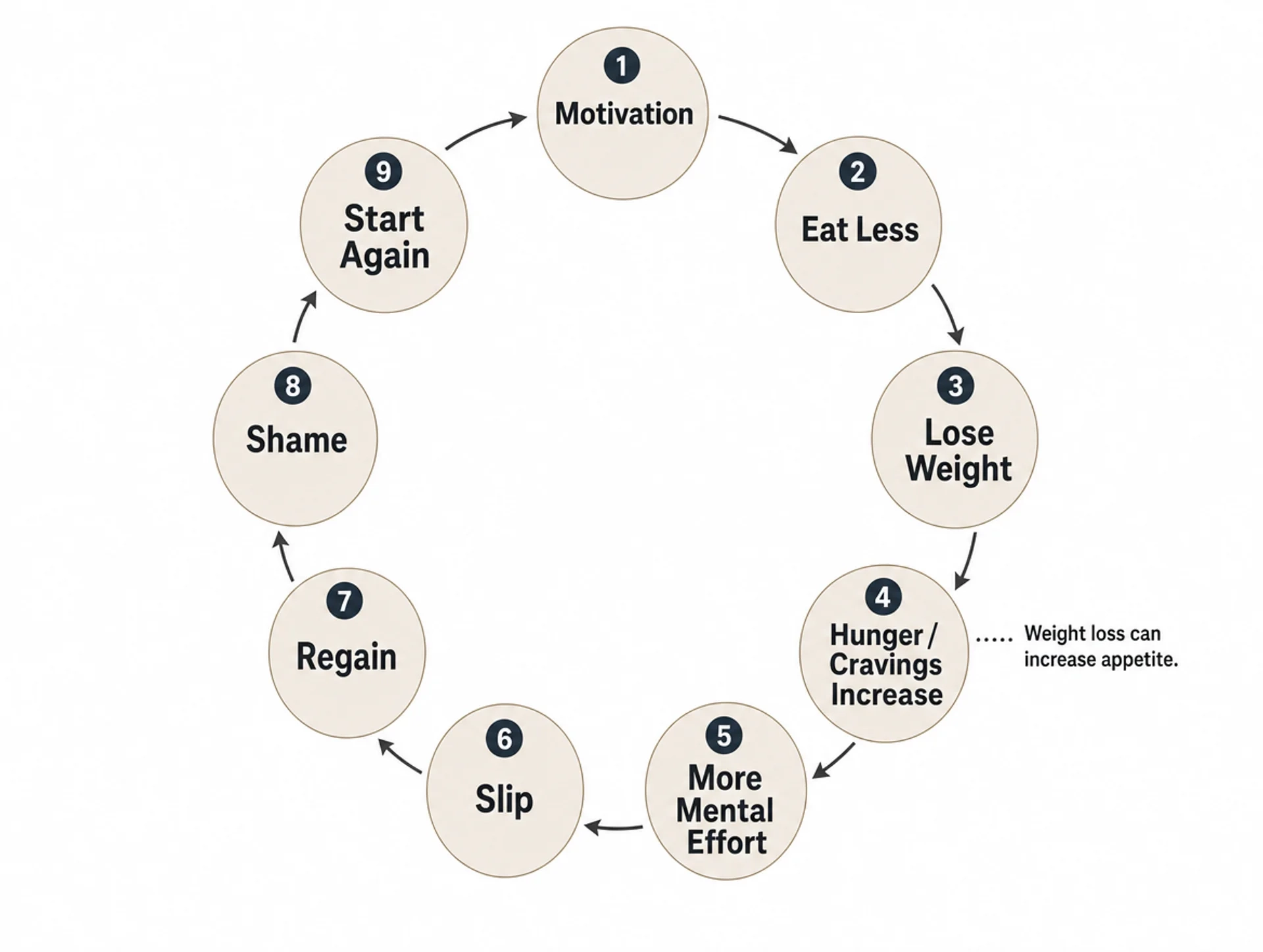
The cycle most women know by heart. What changes at step four is biology, not effort.
Except there’s a problem with that explanation — and most women already know it.
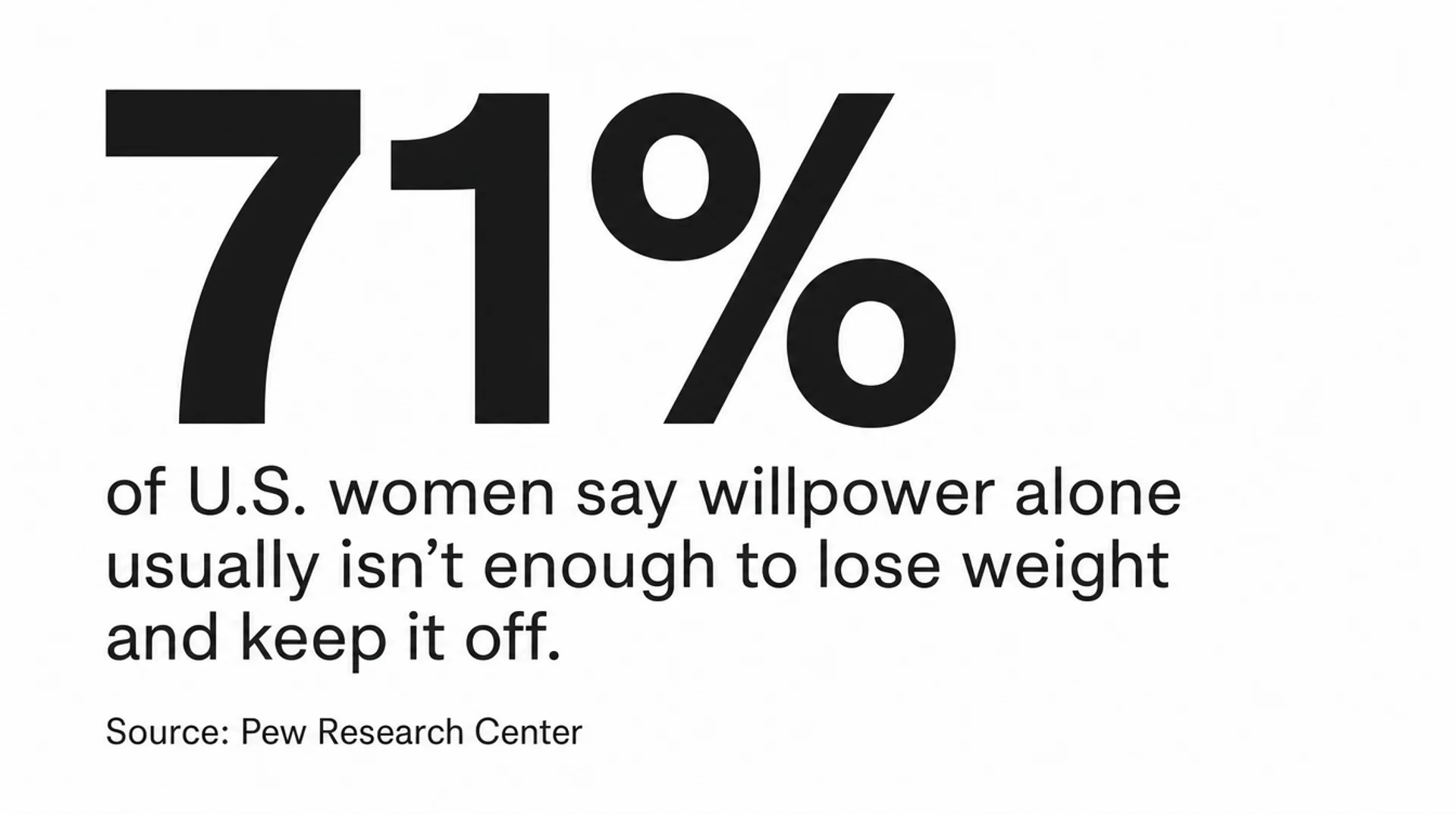
In research from Pew, 71% of U.S. women said willpower alone is usually not enough for people to lose weight and keep it off. We apparently understand this when we’re talking about everybody else.
So why are we so much harsher when we’re talking about ourselves?
The Strange Part: We’ve Decided Harder Means Better
If somebody has high blood pressure and medication helps control it, nobody says: “Come on. Do it naturally.”
If someone needs migraine medication, we don’t admire the person who suffered through the most headaches.
But when it comes to weight? Suddenly suffering becomes part of the requirement. If you’re hungry all day but resist it — good. If you spend every night fighting cravings — that’s the job. And if medicine makes those same cravings easier to manage, people start asking whether the result still “counts.”
Health isn’t a competition. And your body doesn’t hand out bonus points because reaching your goal was miserable.
People taking GLP-1 medications talk about this constantly. They’re sometimes told they took the “easy way out.” That they didn’t really earn their result.
Which raises a much more interesting question: what if a GLP-1 actually does make weight loss easier?
Why would that automatically be bad?
Easier Doesn’t Mean Effortless
Medication doesn’t go grocery shopping for you. It doesn’t decide what you order at dinner. It doesn’t take your walks. It doesn’t make you prioritize protein.
But what medication may change is the environment in which you’re trying to make those decisions.
And that distinction matters — because there is a massive difference between knowing what you should eat, and having your brain ask you for food all day long.
Have you ever wondered why losing weight can feel harder the longer you do it? This is where the “just be more disciplined” story starts becoming incomplete.
The human body isn’t a passive calculator. When people lose weight, the body can respond in ways that make maintaining that loss harder — including increasing appetite and reducing energy expenditure. Researchers have measured this compensatory response. You can be doing everything “right” and simultaneously have your body putting more pressure on you to eat.
That doesn’t mean your behavior doesn’t matter. It means your behavior doesn’t happen in a biological vacuum.
Then There’s the Thing People Now Call “Food Noise”
You may not realize you experience it until somebody describes it.
You finish breakfast and start thinking about lunch. You walk past the kitchen and suddenly remember what’s in the pantry. You’re working, but part of your brain is planning dinner. Something sweet would be good. No. I’m trying to be good. Maybe just something small. Why am I still thinking about this?
That persistent mental pull toward food is what people mean when they say “food noise.” And it’s one of the reasons some GLP-1 users describe their experience in terms that have almost nothing to do with the number on the scale.
The change they notice isn’t necessarily “I suddenly became amazing at dieting.”
It’s: “Food isn’t taking up the same amount of space in my head.”
The Part of GLP-1 Medication People Often Misunderstand
GLP-1-based medications interact with biological pathways involved in appetite, satiety and food intake. Semaglutide acts on the GLP-1 pathway; tirzepatide acts on both GIP and GLP-1 pathways. These prescription medications may help appropriate patients feel less hungry or become satisfied sooner.
That doesn’t mean “hormones caused every pound I gained.” And it certainly doesn’t mean “my choices never mattered.”
It means something more reasonable: your choices matter. And the biological signals influencing those choices matter too. If medical treatment helps make those signals easier to manage, using that tool isn’t proof that you lack character. It’s another way of approaching a problem you may have been fighting for years.
“Okay. But What About the Side Effects?”
This may be the second thought stopping you. Because you’ve heard the stories. The woman who felt nauseous. The friend of a friend who couldn’t eat. The Reddit thread you found at midnight.
Those experiences shouldn’t be dismissed. But there are two mistakes people often make when thinking about risk.
The first is assuming that because a side effect can happen, it will happen to them.
The second is comparing the risks of treatment to an imaginary alternative in which doing nothing carries no consequences whatsoever. Carrying clinically significant excess weight has its own well-documented risks.
For someone in that position, the honest questions are: what could I potentially gain from treatment — and what are the potential risks for me, specifically?
That’s a conversation for a clinician. Which brings up the next concern.
“But I’m Not Ordering Injectable Medication From Some Random Website”
Good. You shouldn’t.
The enormous demand for GLP-1 medications has created a confusing online market. There are legitimate healthcare programs. There are questionable providers. And there are websites selling products you absolutely should be skeptical of.
When you’re dealing with a prescription medication, cheap and convenient are not enough.
That’s exactly where Arbor stands out.
Arbor was built to make online GLP-1 care feel like healthcare — not internet shopping. It’s a U.S. telehealth platform that connects patients with licensed healthcare providers who determine whether prescription treatment is medically appropriate. And instead of simply shipping medication and disappearing, the program is designed around ongoing care.
According to Arbor, its program includes:
- Board-certified U.S. physicians reviewing patient histories
- Licensed U.S. pharmacy partners fulfilling prescribed medications
- 24/7 access to licensed clinicians when questions come up
- On-time refill support, so patients aren’t repeatedly left without treatment
- Registered-dietitian aftercare as patients progress beyond medication
And Arbor reports having treated more than 10,000 patients.
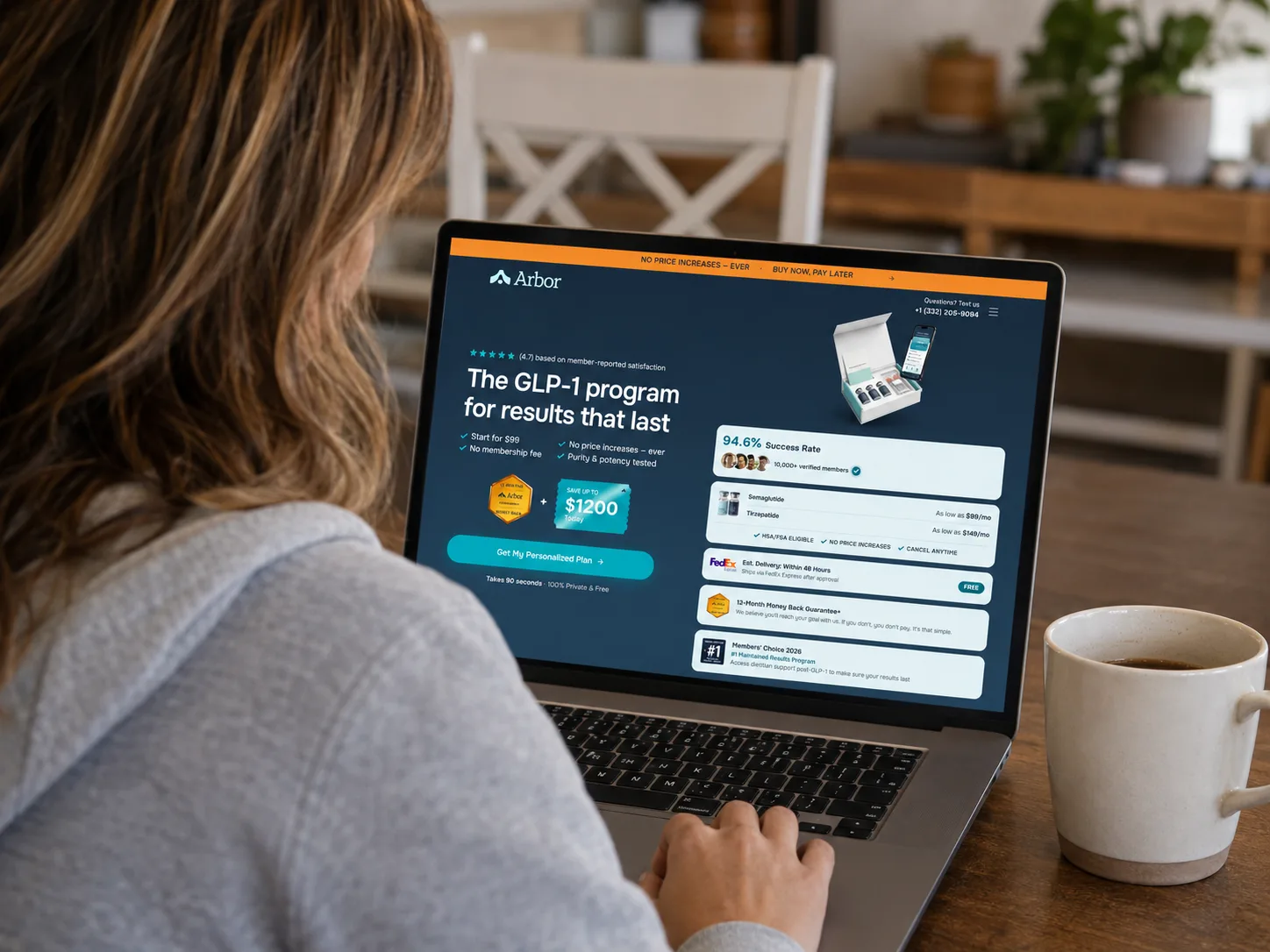
This isn’t supposed to feel like ordering a mystery vial from an Instagram ad. It’s supposed to feel like healthcare — just without the waiting room.
The Part Many Women Don’t Expect: Arbor Starts at $99/Month
By this point, you may already be thinking: “Okay. But medically supervised GLP-1 care like this has to be expensive.”
Names like Ozempic and Wegovy have trained people to expect prices in the hundreds — or even four figures. Actual patient costs vary dramatically depending on insurance, manufacturer savings programs and eligibility. But if you’ve ever looked at cash-pay or list pricing, you know how expensive this category can become.
Arbor approaches the economics very differently:
- Semaglutide programs currently start from $99/month
- Tirzepatide programs currently start from $149/month
According to Arbor, starting-tier pricing includes medication if prescribed, clinician care, refills and shipping.

That changes the question. It’s no longer “Can I afford some $1,000-a-month celebrity drug?” It’s “If a clinician thinks this could be appropriate for me, could $99 a month finally make long-term weight loss possible?”
For a lot of women, that’s a completely different conversation.
Which Brings Us Back to the Original Question
Is taking a GLP-1 cheating?
Who exactly are you cheating? Your friend who somehow forgets lunch exists? There is no prize waiting for the person who took the most difficult route.
What actually matters: how you feel walking up a flight of stairs. Whether you avoid being in photos. How much mental energy food consumes. What your clinician thinks about your health. And whether you want to spend another year trying to prove that you can do this with enough willpower.
Shame shouldn’t be the thing making that decision.
There is no medal for doing this the hardest possible way. Maybe getting help doesn’t mean you failed. Maybe using every appropriate tool available to you is the more rational choice.
Arbor programs currently start from $99/month, and the first step takes about ninety seconds: a private eligibility check that tells you whether a clinician is likely to consider treatment appropriate for you.
Women aren't asking for a shortcut. They're asking why the hardest route was ever the requirement.
A weight-management physician, to Spotlight Daily
Comments (6)
Sorted by topThe blood pressure comparison is what got me. Nobody tells my dad to 'do it naturally' with his hypertension meds. Why was I treating this differently?
Nurse here. The food noise description is the most accurate thing I've read on this. Patients don't believe me when I tell them it's not a character flaw.
I'll say it: this still reads like an ad to me. Yes, the shame part is true. But 'it starts at $99' is doing a lot of work in this article.
Seventeen diets since 2009. Seventeen. I cried reading the part about concluding that YOU failed instead of the strategy.
I did the eligibility check last week mostly to prove to myself I'd be rejected. I wasn't. Still thinking about it, but for the first time it feels like a decision instead of a confession.
My sister uses one of these programs and honestly the biggest change is that she stopped talking about food all the time. Family dinners are nicer.